

The Rapture: A Moment of Divine Transformation
In the blink of an eye, everything will change. Not with the slow march of time or the gradual shift of seasons, but in an instant—faster than you can turn your head from one direction to another. This is the promise of the rapture, a moment when millions upon millions of believers will be transformed and united with Christ.
But what exactly is the rapture, and why should it matter to us today?
The concept of the rapture comes from the apostle Paul’s teachings to the early church. He wrote to comfort believers who were concerned about their deceased loved ones, fearing they might miss out on Christ’s return. Paul assured them that this wasn’t the case—in fact, those who have died in Christ will rise first.
This event is not to be confused with Christ’s second coming. Rather, it’s the next major event on the prophetic calendar—a moment when believers will be “caught up” to meet the Lord in the air. The word “rapture” itself means to be violently snatched out, emphasizing the sudden and dramatic nature of this event.
But how can this be possible? How can bodies long decayed or scattered across the earth be reconstituted and raised? To understand this, we must remember the power of God. This is the same God who spoke the universe into existence, who formed Adam from the dust of the ground. If He can create everything from nothing, surely He can reconstruct and transform our bodies.
The bodies we receive will be glorified bodies, like that of Jesus after His resurrection. They will no longer be subject to decay, aging, or the urges that lead us to sin. These new bodies will transcend the limitations of time and space, allowing us to exist in God’s presence in a way we can scarcely imagine now.
This transformation will happen in stages:
1. The shout of Christ Himself, speaking to death and commanding it to release its hold.
2. The voice of the archangel Michael, directing angels to escort believers into God’s presence.
3. The trumpet of God, signaling His imminent appearance and calling His people to worship.
It’s a beautiful picture of God’s attention to detail and His desire to leave no stone unturned in bringing His children home.
But what does this mean for us today? How should the knowledge of the rapture impact our daily lives?
First and foremost, it should instill in us a sense of anticipation and hope. Just as someone eagerly waits at an airport for a loved one’s arrival, we should live with the expectation that Christ could return at any moment. This isn’t about setting dates or making predictions—it’s about living with a constant awareness of God’s promises and the temporary nature of our current existence.
Secondly, it should motivate us to live lives worthy of our calling. Paul writes in Titus 2:11-13:
“For the grace of God has appeared, bringing salvation to all men, instructing us to deny ungodliness and worldly desires, and to live sensibly, righteously, and godly in the present age, looking for the blessed hope and the appearing of the glory of our great God and Savior, Jesus Christ.”
Our anticipation of Christ’s return should lead us to live differently—denying ungodliness, embracing righteousness, and actively looking forward to our reunion with Christ.
This brings us to an important point: the judgment seat of Christ. While this isn’t a judgment to determine salvation (that’s already settled for believers), it is an evaluation of how we’ve lived our lives since coming to faith. Have we built on the foundation of Christ with gold, silver, and precious stones—or with wood, hay, and stubble?
This judgment isn’t about comparing ourselves to others or focusing on external appearances. It’s about the motivations of our hearts and the true nature of our service to God. Have we given God our best, or merely what’s left over? Have we served with pure motives, or for the praise of others?
The imagery of fire is used to describe this judgment—not as punishment, but as a refining process. Our works will be tested, and only what is truly valuable in God’s eyes will remain. This should challenge us to examine our priorities and the way we’re investing our time, talents, and resources.
It’s easy to get caught up in the pursuits and pleasures of this world, competing for status or material possessions. But in light of eternity, these things lose their luster. Instead, we’re called to compete in doing the work of God—running to advance His kingdom, serving His church, and blessing others in His name.
This doesn’t mean we abandon our earthly responsibilities or live in constant anxiety about the future. Rather, it means we approach each day with an eternal perspective, recognizing that our actions have consequences beyond what we can see in the moment.
As we reflect on the promise of the rapture and the judgment seat of Christ, let’s ask ourselves some challenging questions:
– Am I living each day with the awareness that Christ could return at any moment?
– How am I building on the foundation of faith in my life? Am I using materials that will withstand the test of fire?
– Are my priorities aligned with God’s priorities? Am I investing in things of eternal value?
– How can I serve God and others more faithfully, with pure motives and a willing heart?
The rapture isn’t just a fascinating theological concept—it’s a call to action, a reminder of the urgency of our mission as believers. It’s an invitation to live with purpose, to love deeply, to serve wholeheartedly, and to fix our eyes on the hope that lies before us.
As we go about our daily lives, may we carry this anticipation in our hearts. May we be found faithful when that trumpet sounds, ready to meet our Savior face to face. And may the promise of that glorious moment inspire us to live lives that truly matter—both for now and for eternity.
In Christ Alone,
Dr. Marcus D. Floyd, D.Min.
Further READING
“But I do not want you to be ignorant, brethren, concerning those who have fallen asleep, lest you sorrow as others who have no hope. For if we believe that Jesus died and rose again, even so God will bring with Him those who sleep in Jesus. For this we say to you by the word of the Lord, that we who are alive and remain until the coming of the Lord will by no means precede those who are asleep. For the Lord Himself will descend from heaven with a shout, with the voice of an archangel, and with the trumpet of God. And the dead in Christ will rise first. Then we who are alive and remain shall be caught up together with them in the clouds to meet the Lord in the air. And thus we shall always be with the Lord. Therefore comfort one another with these words.” (1 Thessalonians 4:13–18, NKJV)
SHARE THIS BLOG POST
Every person whose life is improved or saved, stems from an act of generosity that’s purely voluntary. That’s why donating is so extraordinary when you do it.
SEND ME Dr. Floyd's Devotionals
On Television
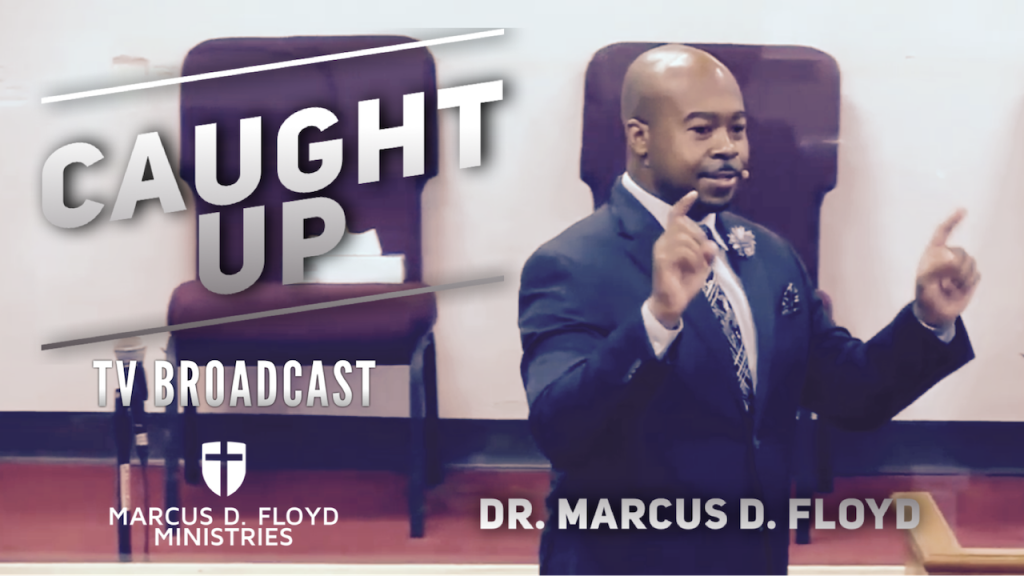
This episode aired on the Christian Television Network Sunday, September 22, 2024. In this powerful message, we research the mystery and hope of the rapture, focusing on 1 Thessalonians 4:13-18. We’re reminded that as believers, death is not the end but merely a sleep for our bodies while our souls and spirits go to be with the Lord. The rapture will be a sudden, miraculous event where Christ will call His church to Himself. In the twinkling of an eye, the dead in Christ will rise first, followed by those still living. This truth should fill us with hope and anticipation, encouraging us to live righteously and purposefully. We’re challenged to consider: Are we ready for Christ’s return? Are we building our lives with ‘gold, silver, and precious stones’ that will withstand God’s judgment, or with ‘wood, hay, and straw’ that will be consumed? Let’s live each day in light of eternity, eagerly awaiting our blessed hope while serving God wholeheartedly.
